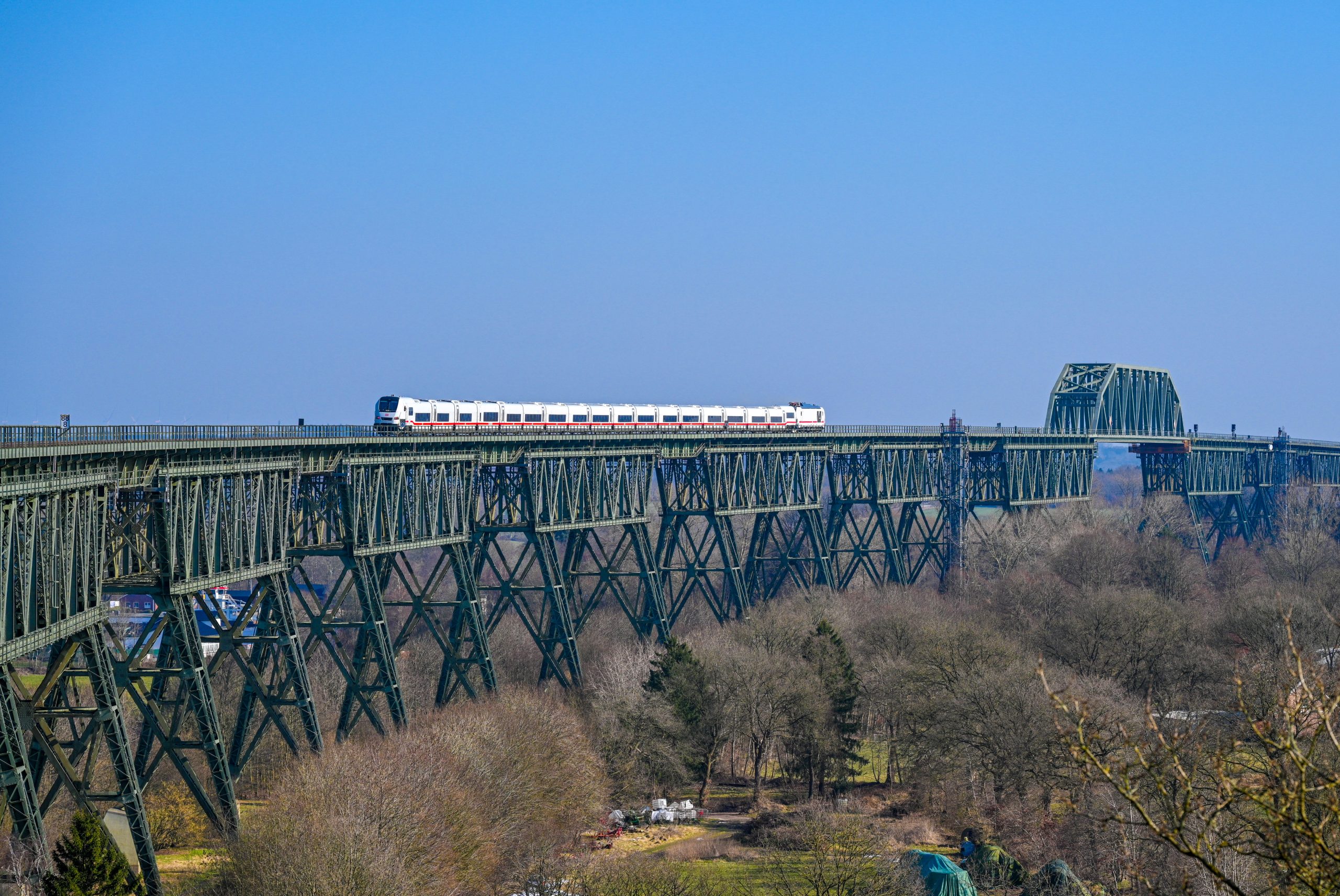
Electrification of the Marschbahn line
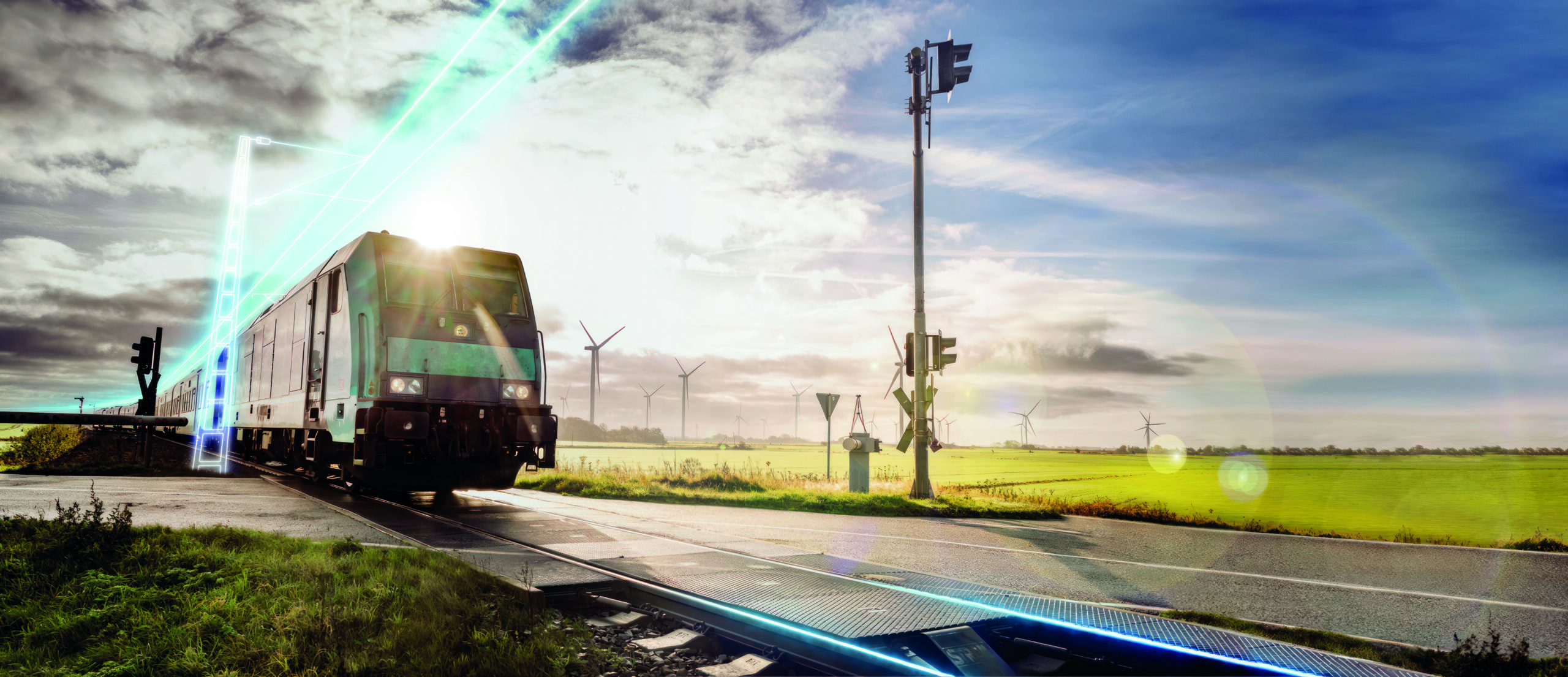
The Marschbahn between Elmshorn and Westerland is one of the central rail corridors in northern Germany and is vital for regional, national and international rail traffic. While sections of the route have already been electrified, the approximately 173-kilometer section between Itzehoe and Westerland is currently still operated with diesel traction. This has an impact on the company’s performance and operational processes, while also affecting environmental aspects. There is potential for optimization, particularly in through long distance transport, as the locomotive currently needs to be changed in Itzehoe.
Against the backdrop of transport and climate policy objectives, the electrification of the Marschbahn is an essential step toward the sustainable further development of the rail infrastructure. The aim of end-to-end electrification is to eliminate existing operational disadvantages and enable efficient, sustainable and environmentally friendly rail operations. The higher acceleration capability of electric traction units also opens up potential for shortening travel times and setting up additional stops along the route.
The project is embedded in the long-term upgrade and development strategy of the rail infrastructure of NAH.SH and the state of Schleswig-Holstein. As part of the electrification of the Marschbahn, it is being examined whether and to what extent other infrastructure projects planned for the Marschbahn can be integrated into the electrification project. The aim is to achieve synergistic effects in planning, approval and construction without disproportionately increasing the scope of the electrification project. The supplementary upgrade projects are therefore an integral part of the services and can optionally be taken into account in further planning phases.
The scope of measures ranges from the construction of new storage sidings, for example in the Heide area, the technical upgrade of line sections, stations and engineering structures, to the construction of new stations and the modernization of existing platforms. Digital rail requirements, including the consideration of ETCS Level 2, are also incorporated into the planning. Existing structures have become an integral part of the planning.
In combination with parallel planned infrastructure projects and long-term plans, the project forms an essential building block for the decarbonization of mobility in Schleswig-Holstein. At the same time, the planned integration of renewable energies via converter sites and substations contributes to the implementation of the region’s energy and climate policy goals.
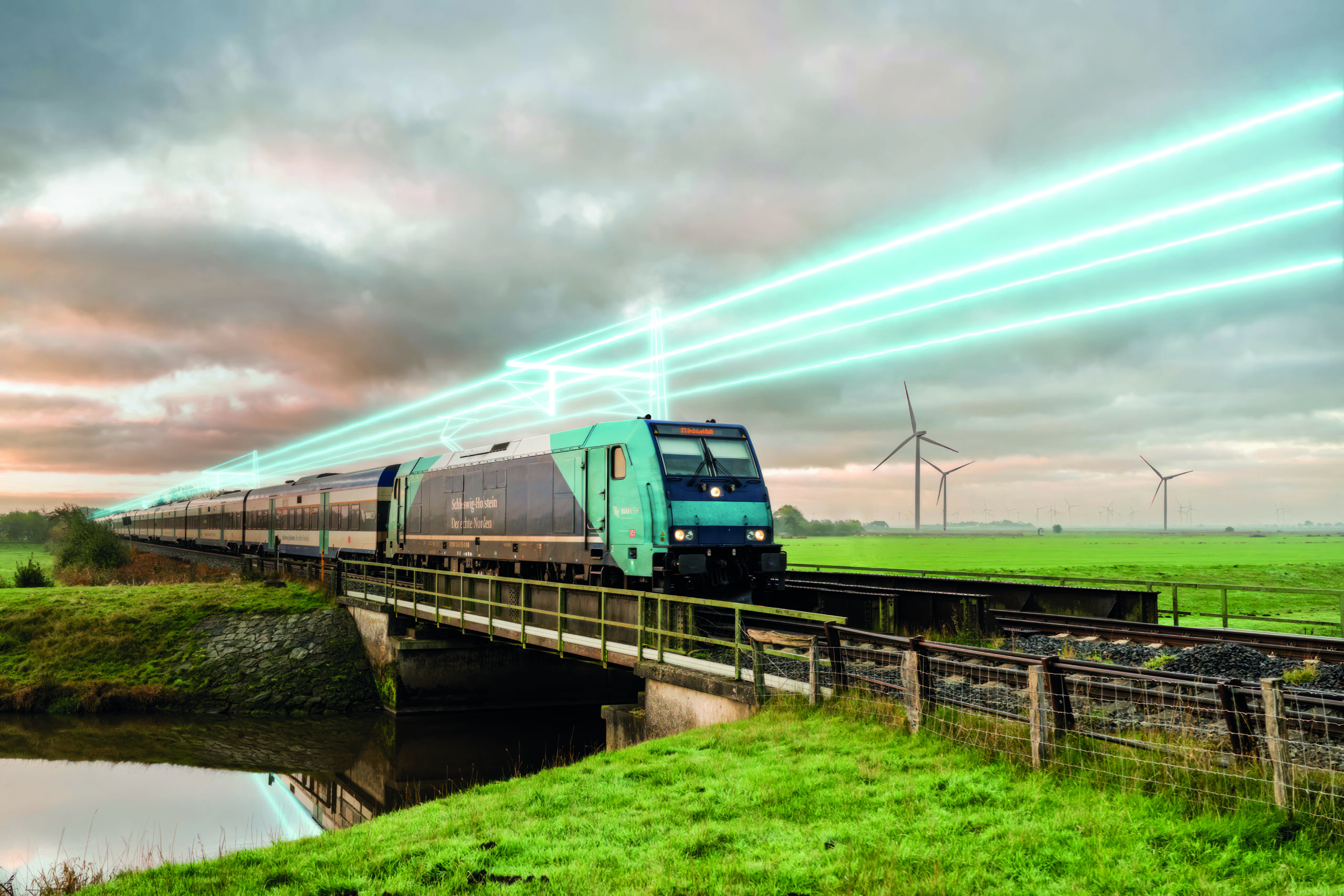
Interdisciplinary BIM planning of the Itzehoe–Heide line
DB Engineering & Consulting has been commissioned with BIM-based design work for the Itzehoe – Heide route, with completion of the concept design slated for the end of 2026.
The comprehensive, interdisciplinary range of services covers all relevant specialist disciplines of rail infrastructure planning.
- Project section: Marschbahn, Itzehoe to Heide
- Length of the route section: approx. 69 km
- Line upgrade: double track
- Use: local, long distance and freight transport
- Connections to routes 1214, 1215 and 1042
- Scope of infrastructure:
- 30 railroad overpasses, including landmarked structures
- 15 overpasses
- 40 railroad crossings
- 9 operating locations
- 85 culverts
- Adjustments to three stations
- Construction of new storage sidings
- Integration of an existing catenary island system for battery-electric multiple units
- Implementation of the project using the BIM methodology
- Design work for HOAI phases 1+2
- Transport infrastructure planning: routing, superstructure, earthworks, railroad crossings, drainage, cable earthworks, roads and paths as well as stations
- Structural engineering: planning of bridges, culverts and retaining structures including the integration of existing structures, such as the landmarked Hochdonn High Bridge (length approx. 2.2 km)
- Catenary systems: new planning with connection to existing railroad installations and integration of new converter locations
- Control-command and signaling: signal boxes and railroad crossings
- Telecommunications in the planning area
- Electrical power systems: connection of electrical point heating systems, signal boxes, railroad crossings, telecommunications systems and stations
- Building information modeling (BIM)
- BIM-based 3D planning
- Creation and application of the client information requirements (AIA) and the BIM execution plan (BAP)
- Collaboration in a common data environment (CDE) including virtual data rooms
- Surveying
- Control surveying
- Track topology and track geometry verification
- Environmental and Geoservices
- Geotechnical engineering
- Georadar survey
- Geotechnical investigations
- Geotechnical foundation consulting
- Geotechnical construction supervision
- Environmental planning
- Environmental impact assessment
- Preliminary Natura impact assessments
- Mapping and biodiversity conservation measures
- Environmental impact mitigation plan
- Surface water impact assessment report
- Environmental construction supervision
- Geotechnical engineering
- Other services
- Electromagnetic environmental impact studies
- Noise and vibration studies
- Construction phase planning
- Contaminated land surveys
- Unexploded ordnance detection